Yard-O-Led Piccadilly Limited Edition Necklace Pocket Pencil
Contact us for Loyalty pricing at info@chatterleyluxuries.com
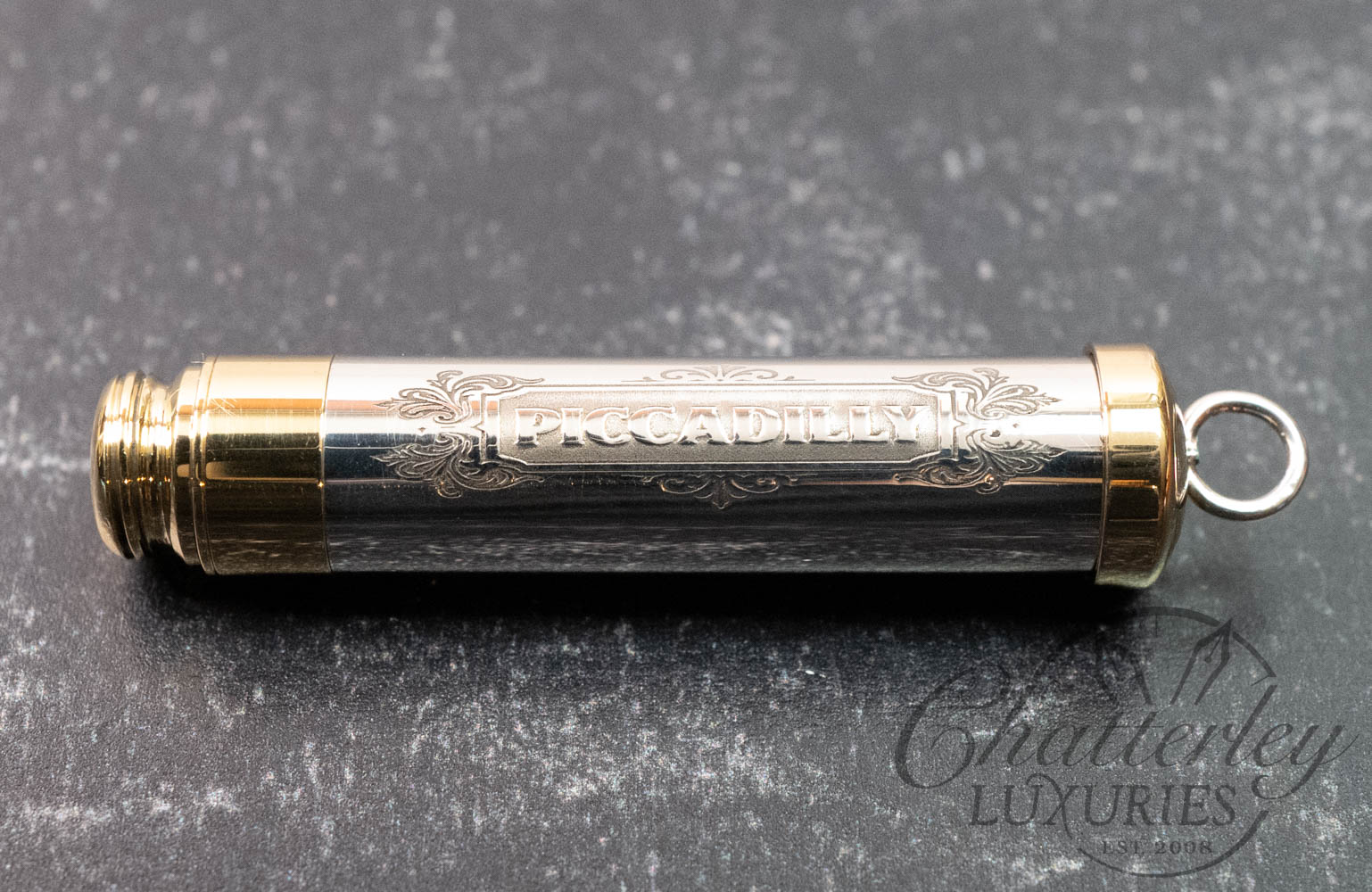
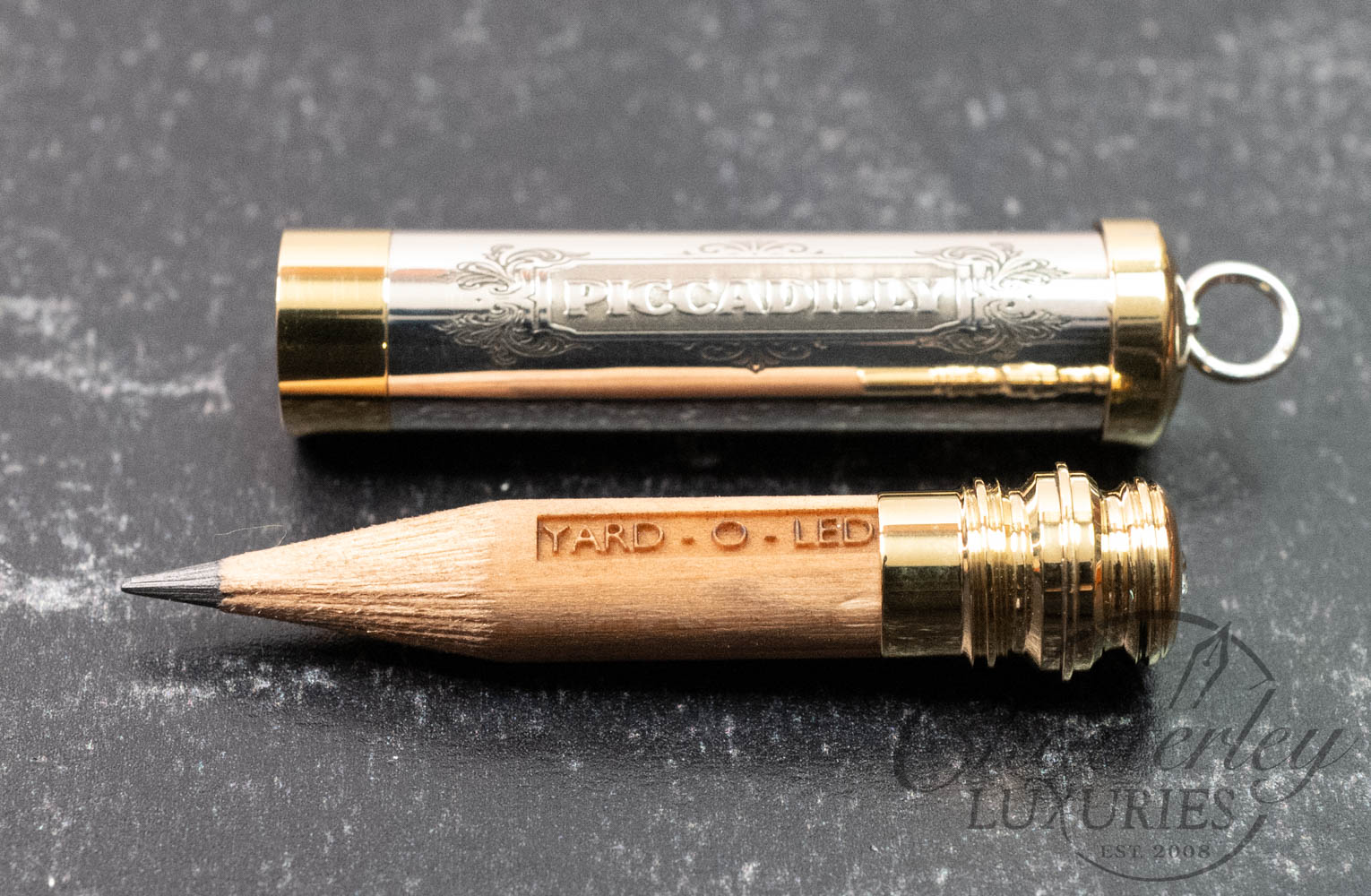
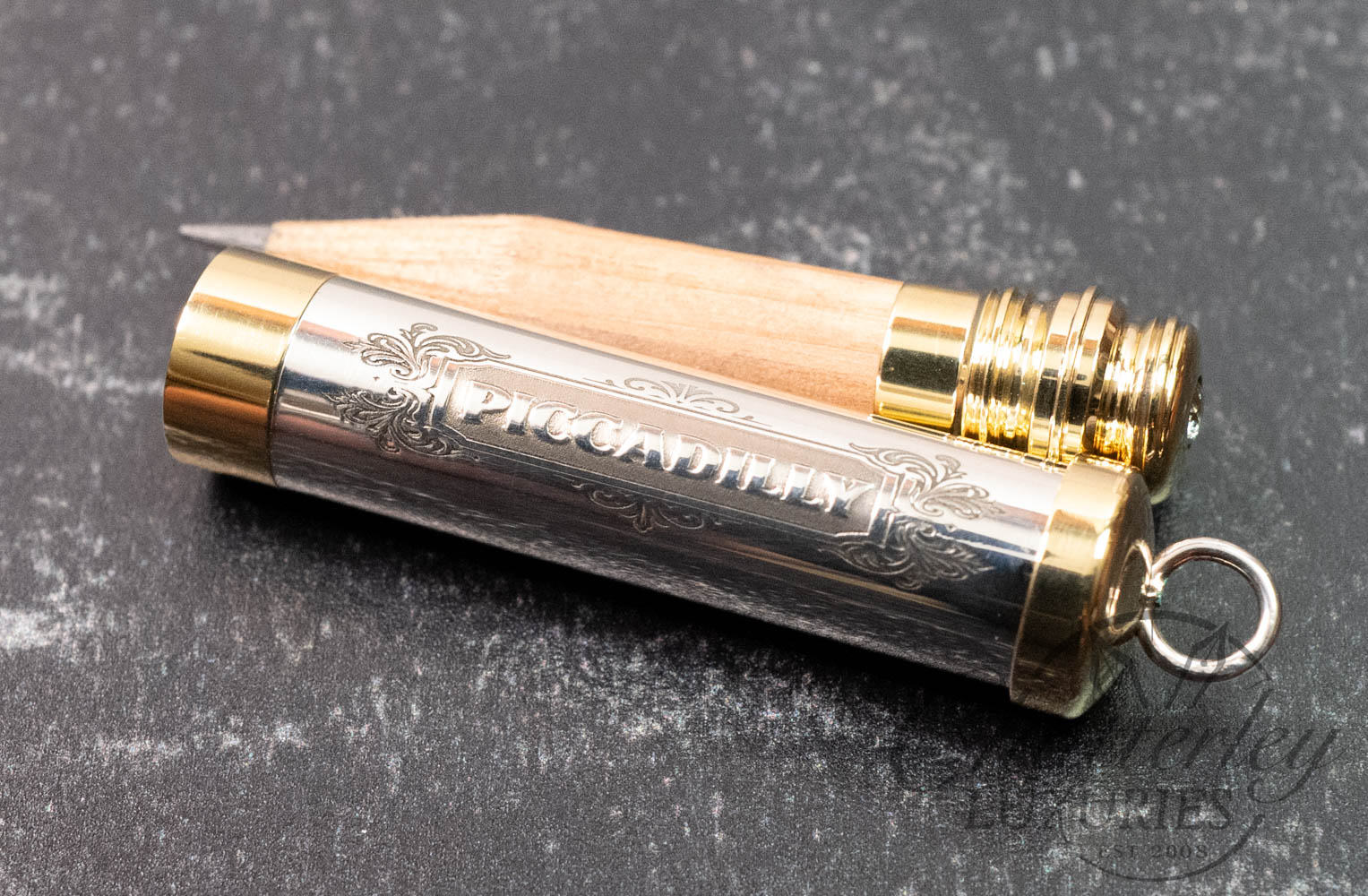

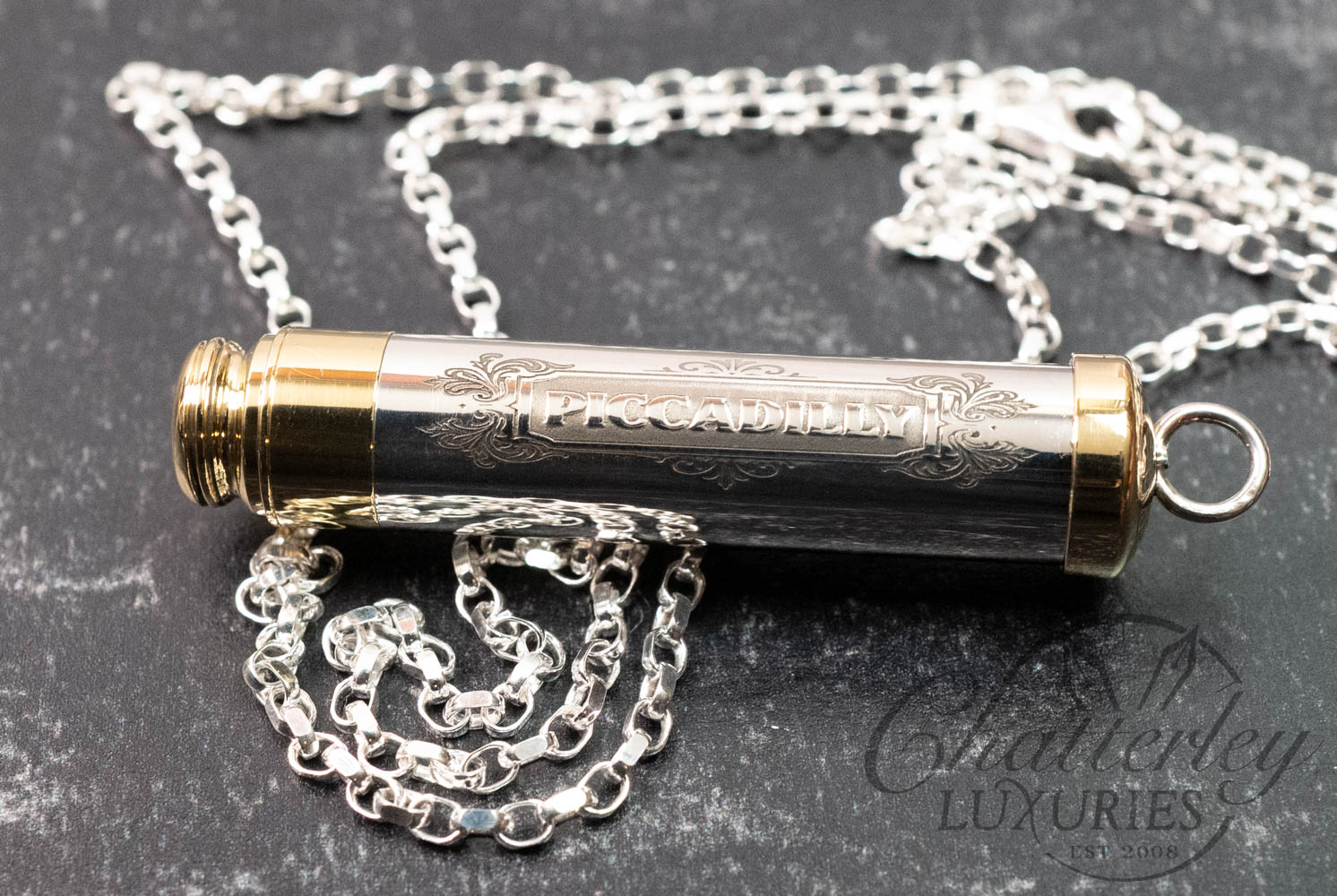

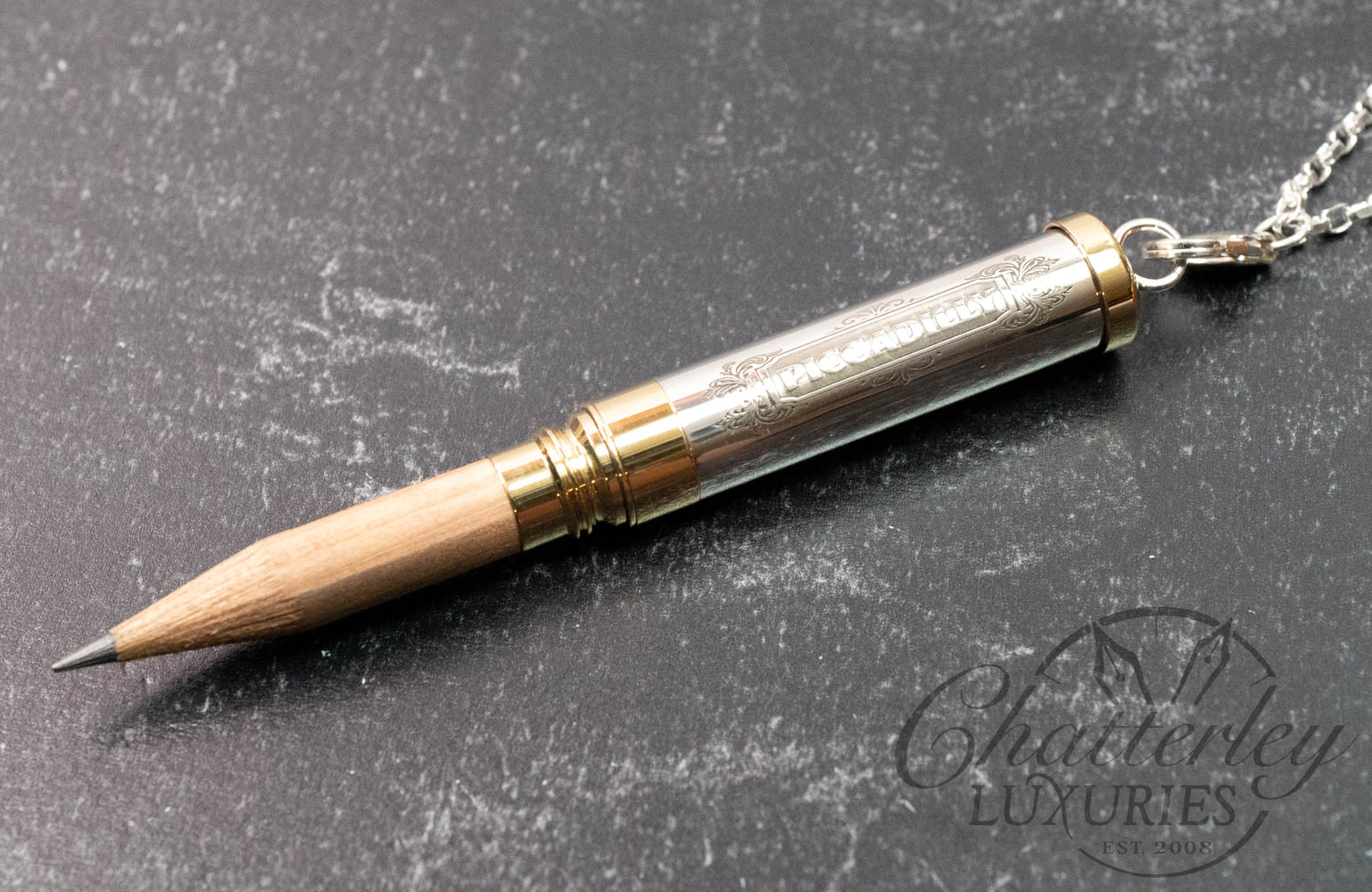
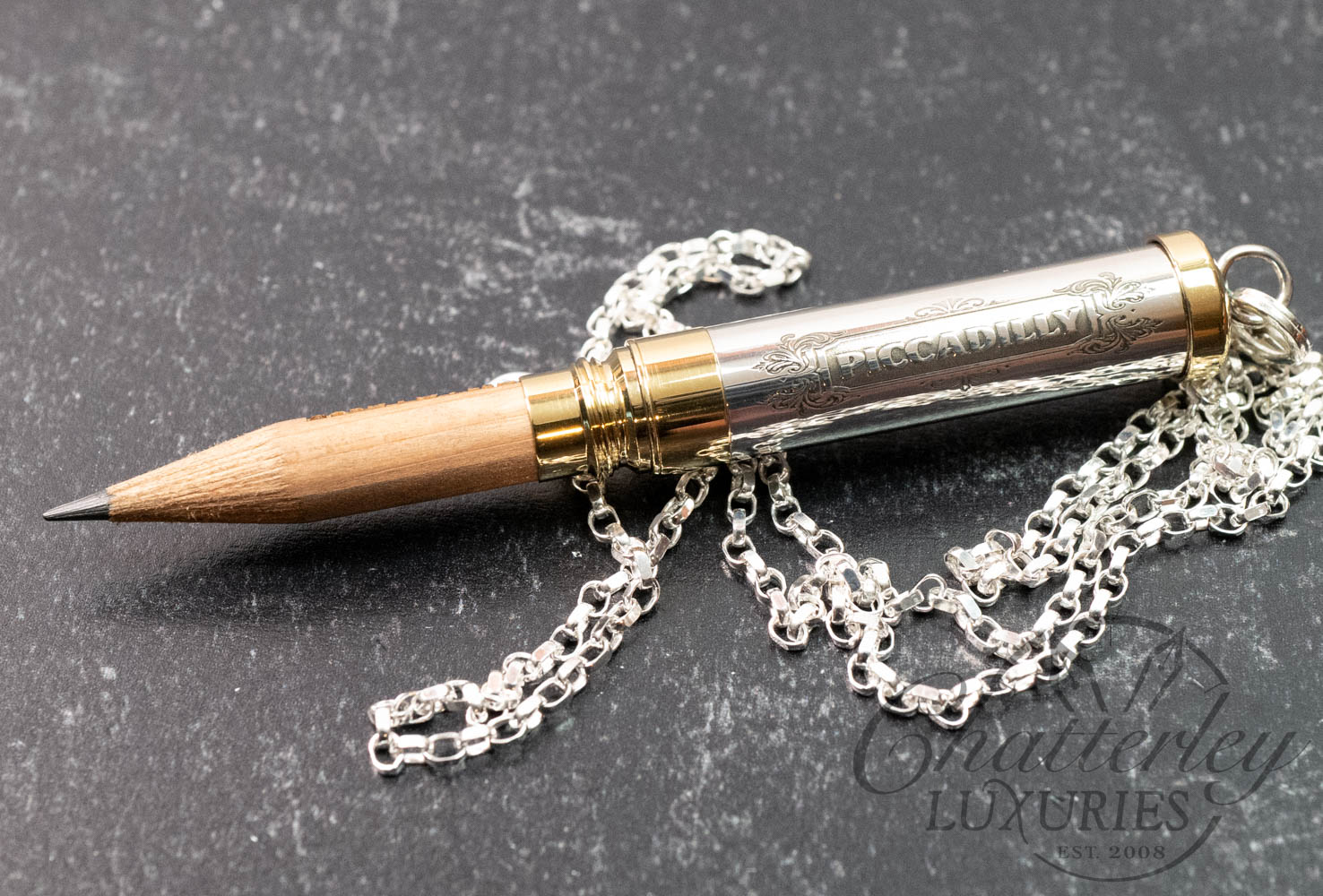
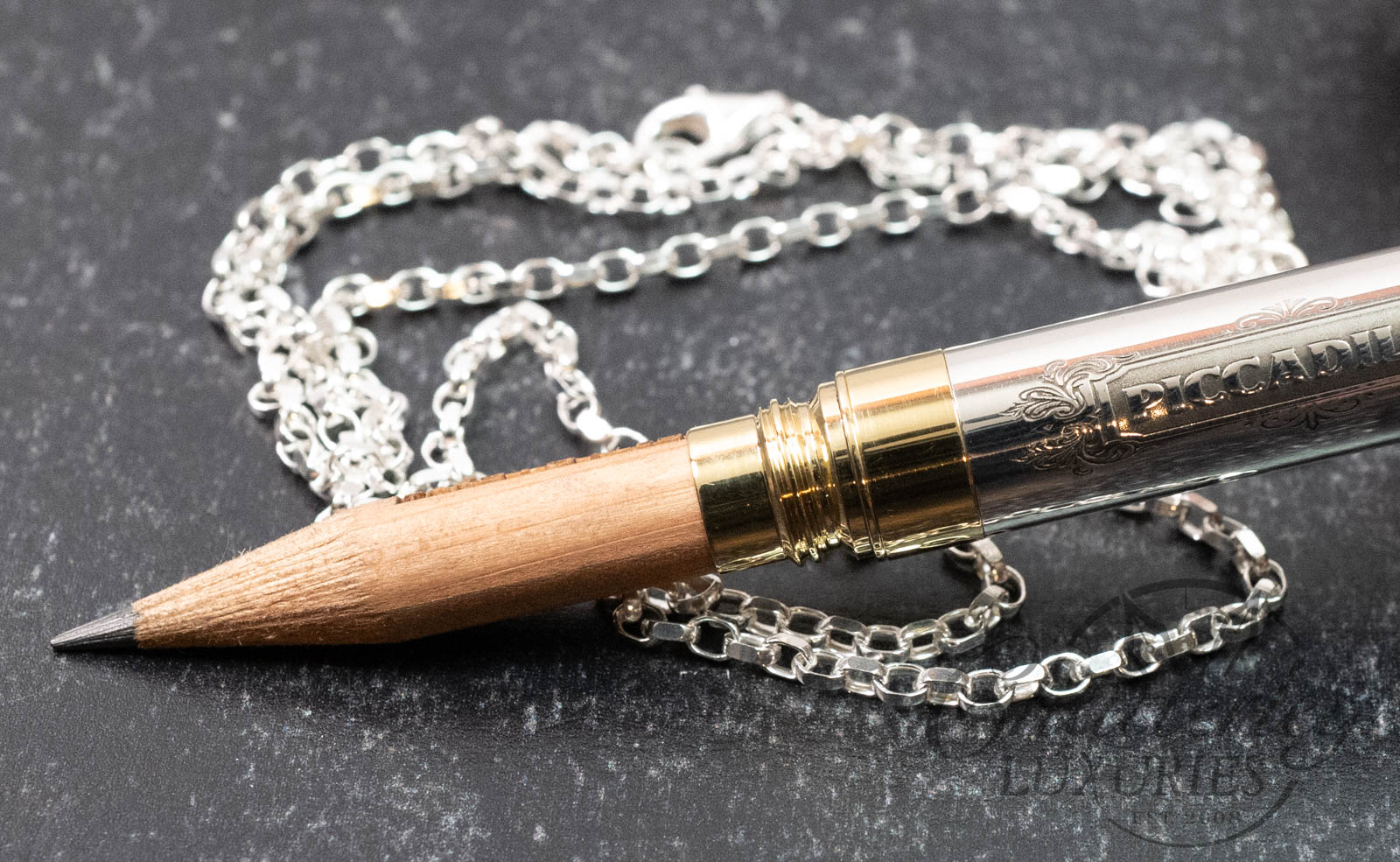
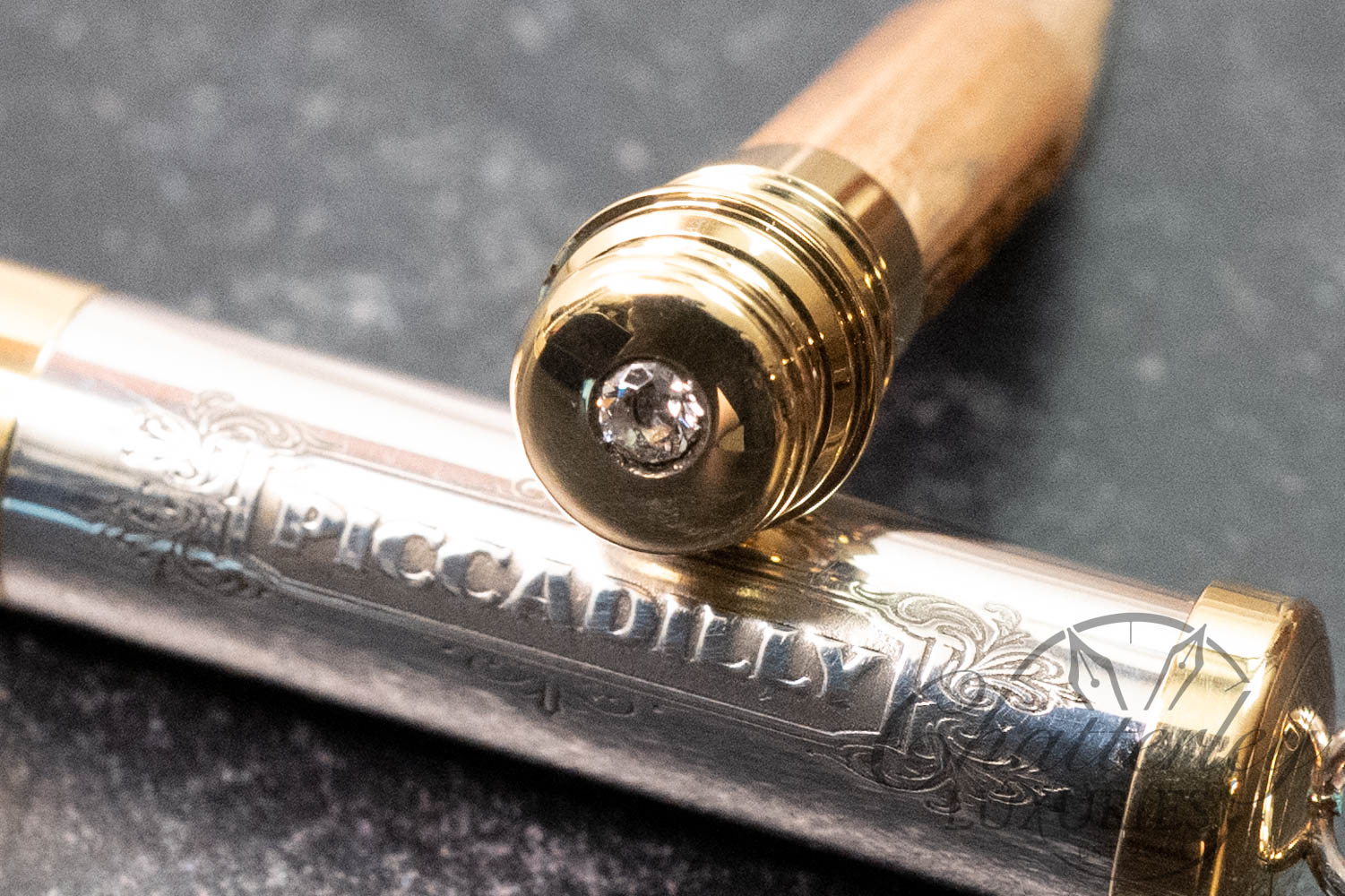
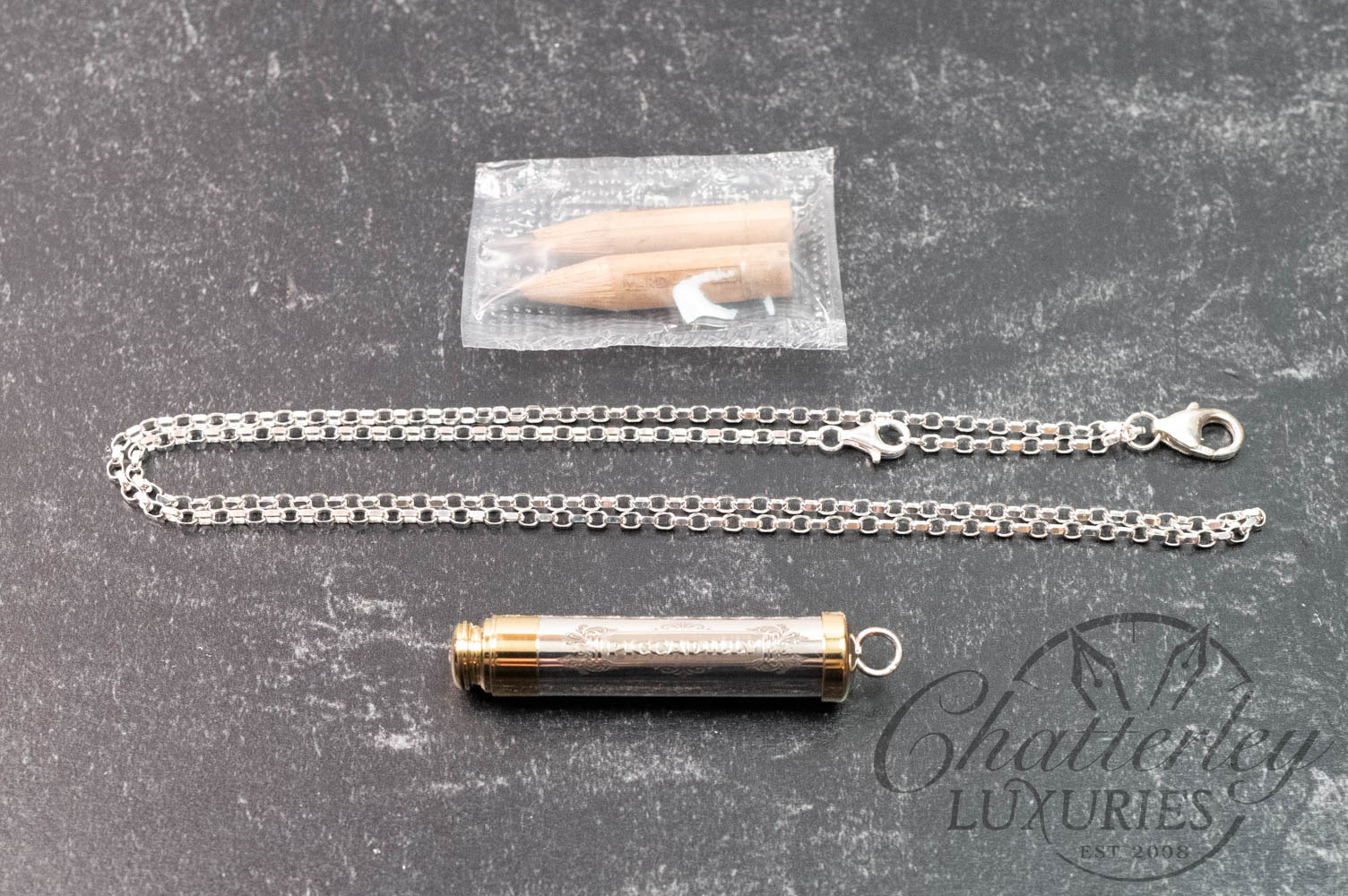
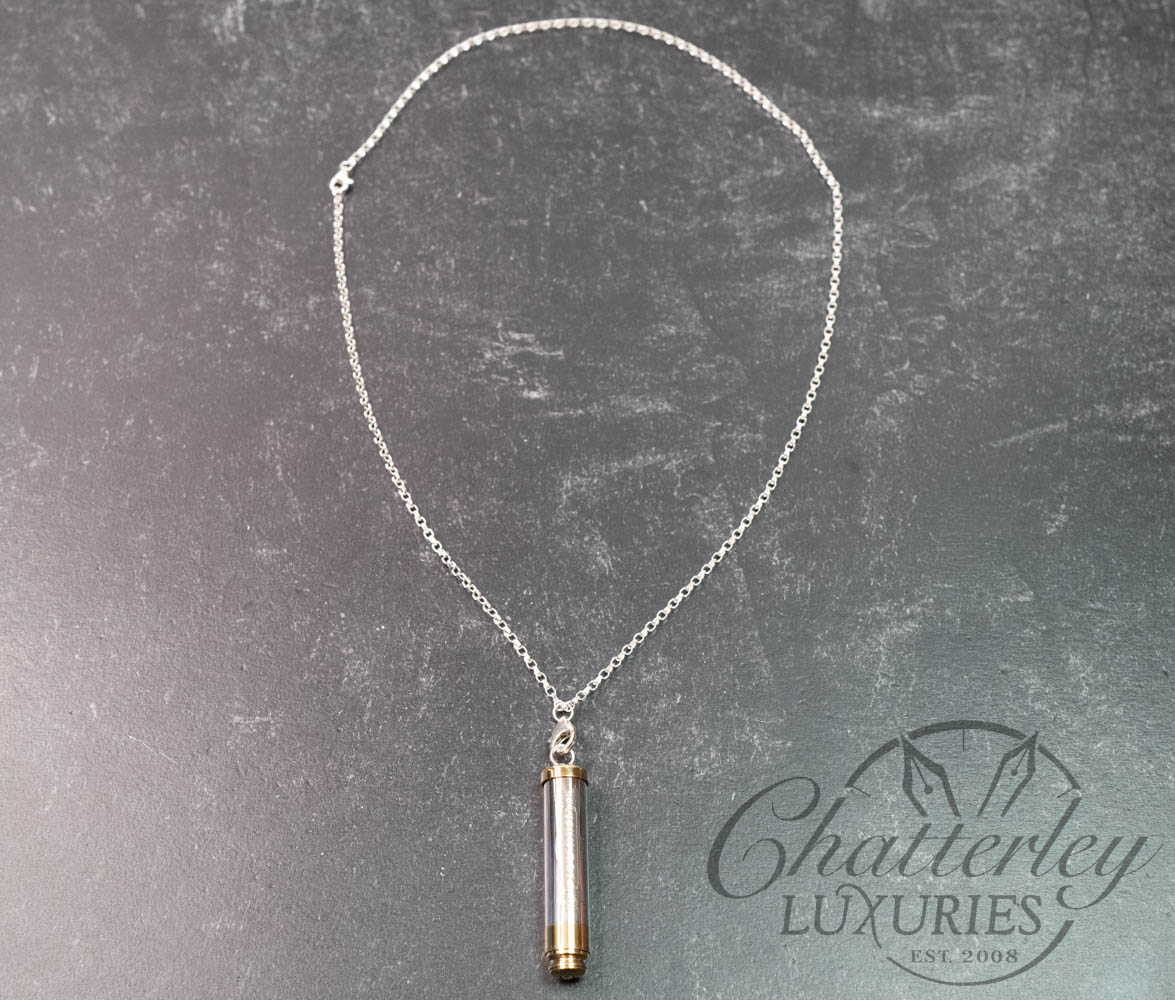
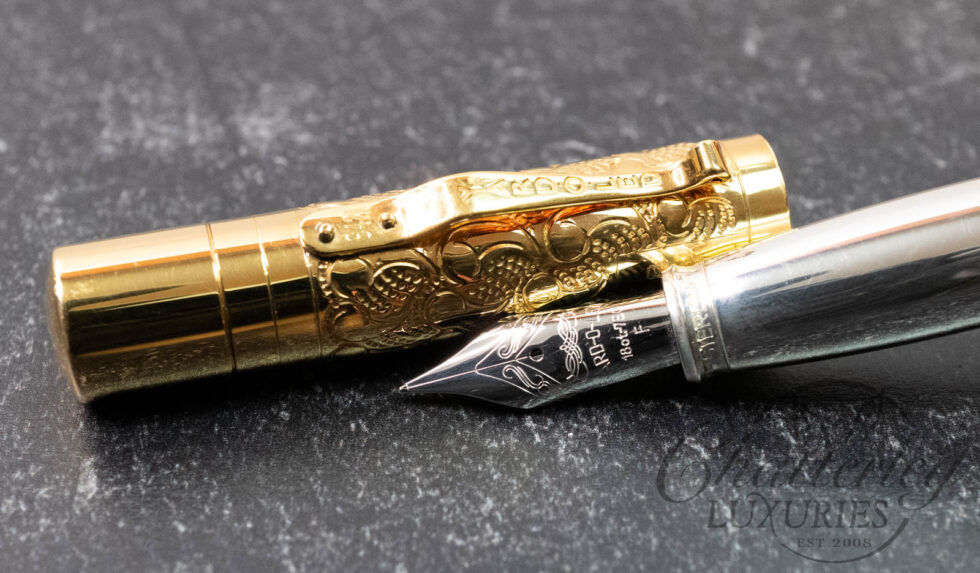
Hand-chased Piccadilly pattern with Cubic Zirconia Gem Stone setting. It comes with 2 pencil refills.
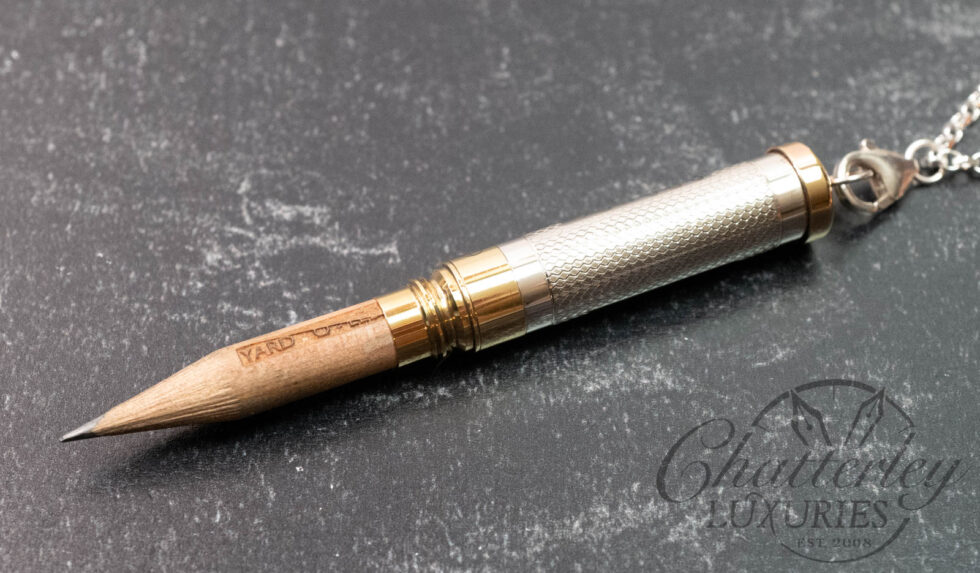
Taking inspiration from our 200 year old history, we have reimagined Samson Mordan’s original pencil necklace from the 1800s. The sterling silver phial holds a graphite pencil, carefully enclosed within the screw top lid which is unwound to double its length creating a full sized writing instrument.
The classically British silversmith, Sampson Mordan [1790 – 1834] created intricate designs, many with whimsical eccentricities. The Piccadilly Necklace reflects the brand’s roots in sterling silver jewelry which Sampson Mordan is so revered for.
The YARD-O-LED story dates back to his invention of the first propelling pencil. Prior to this, he manufactured more simple designs with graphite pencils or mechanical pencils with a singular retractable leads.
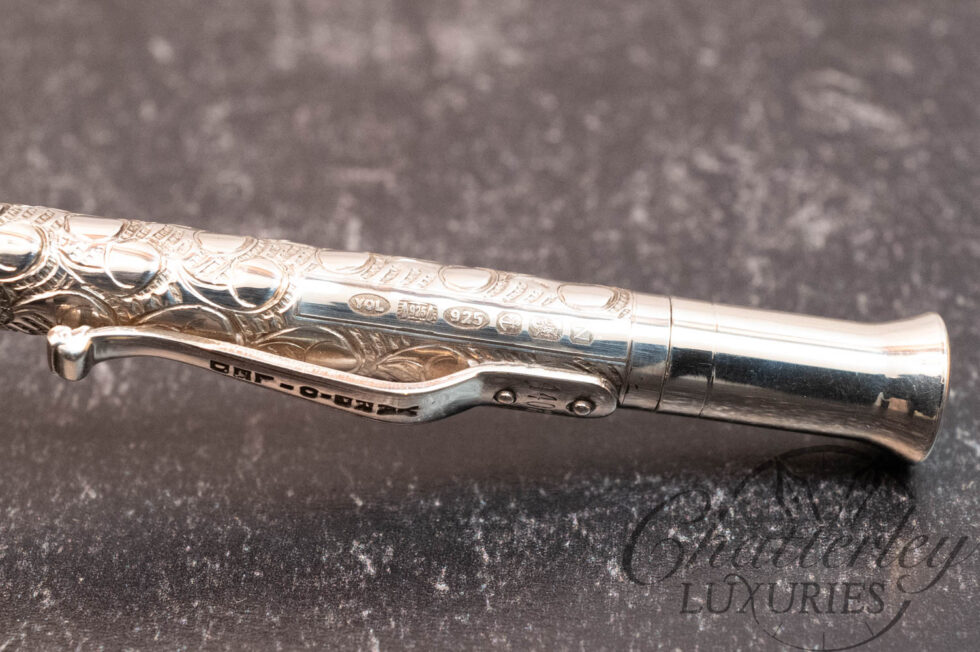
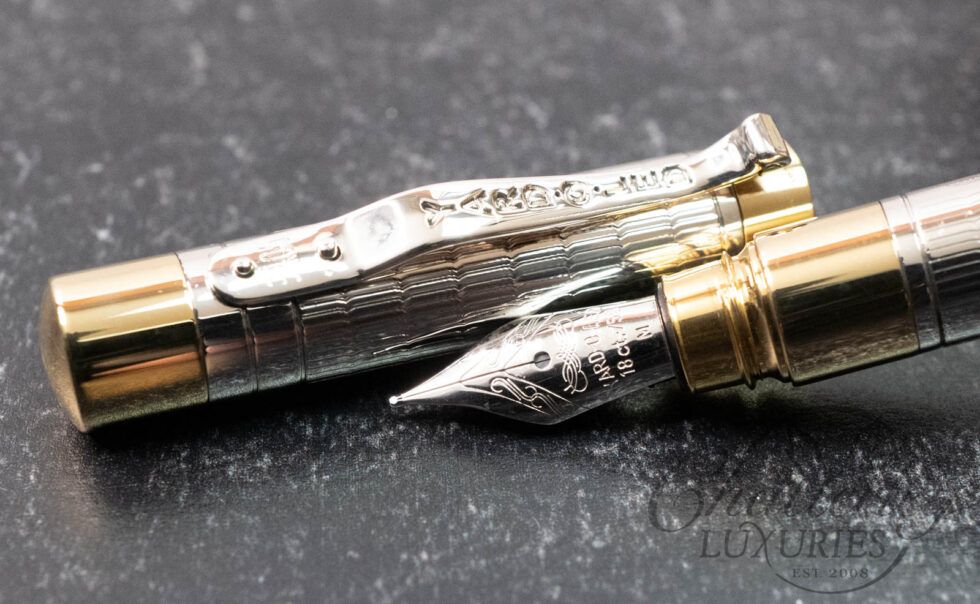
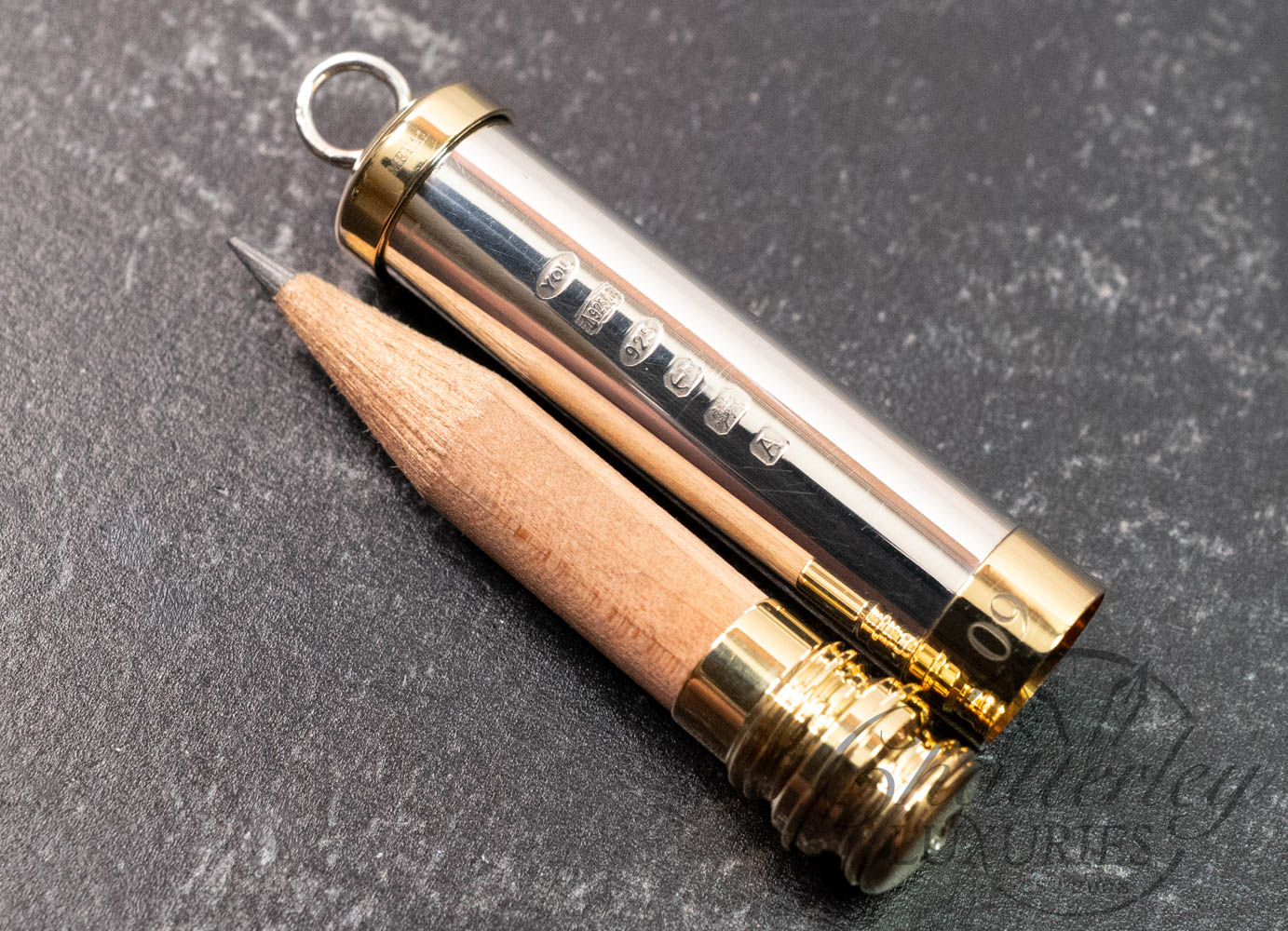
The Piccadilly Necklace is compact, at 2 inches long and hung on a sterling silver chain. The sterling silver barrel is hallmarked and topped and tailed in a brass trim. Available in three designs – a hand-chased Rose or Victorian or Barley engine-turned pattern each come embellished with the gem in the cap in either pink, green or clear. It comes with 2 pencil refills.
Yard-O-Led writing instruments are handcrafted in Birmingham, England, and bear hallmarks from the Birmingham Assay Office, represented by an anchor symbol. We wanted to showcase the beautiful detail by which these writing instruments are date marked, and to provide more information about how to date your pen or pencil.
Key Characteristics of Birmingham Date Letters
- The Date Letter: This mark identifies the year the piece was assayed and consists of a specific letter inside a shaped frame. For example, the letter “B” represents the year 2026.
- Style Variations: To distinguish between 25-year cycles, the assay office changes the font of the letter (e.g., lowercase, uppercase, or bold) and the shape of the surrounding shield or frame.
- Historical Changeover: Prior to 1975, the Birmingham date letter changed every July. Since the Hallmarking Act of 1973, all UK assay offices now switch to the new date letter on January 1st each year.
- Omitted Letters: The letters “i,” “j,” or “l” are often omitted from the cycle to prevent visual confusion.
- Stock Discrepancies: While the date letter indicates when the item was hallmarked, Yard-O-Led occasionally uses “old new stock” parts, which can lead to hallmarks that slightly predate the final assembly year.
You can follow this guide to date mark your writing instrument:
https://www.silvermakersmarks.co.uk/Dates/Birmingham.html